Bayerische Architektenkammer
Körperschaft des Öffentlichen Rechts
Waisenhausstr. 4
80637 München
Telefon: 089 139880 – 0
Telefax: 089 139880 – 55
E-Mail: info@remove-this.byak.de
![]() |
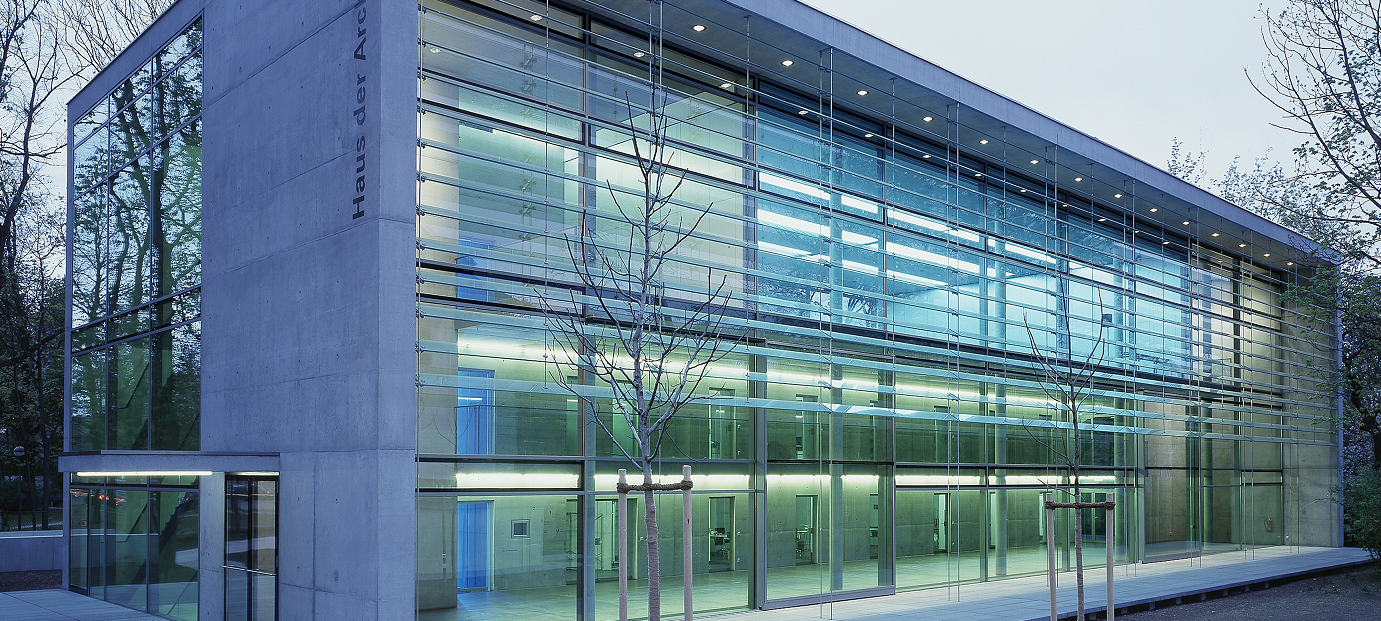
Foto: Simone Rosenberg
Bayerische Architektenkammer
Die Bayerische Architektenkammer ist eine Körperschaft des öffentlichen Rechts, der jede/r Architekt/in, Innenarchitekt/in, Landschaftsarchitekt/in und Stadtplaner/in in Bayern als Pflichtmitglied angehört.
Sie ist ein Teil mittelbarer Staatsverwaltung und damit in deren Tätigkeit eingebunden. Ihre Aufgaben sind im Gesetz über die Bayerische Architektenkammer und die Bayerische Ingenieurekammer-Bau (Baukammerngesetz – BauKaG) festgelegt.
Die Bayerische Architektenkammer – durch Landtagsbeschluss am 1. Januar 1971 errichtet – ist ein wichtiges Ordnungsinstrument im Bereich des Planens und Bauens. Ihre rund 26.000 Mitglieder unterstützt sie auf berufspolitischer Ebene, den Bauherren garantiert sie den hohen Qualitätsstandard der ihr angehörenden Mitglieder.
Seit dem 25. Juni 2021 steht Präsidentin Prof. Lydia Haack an der Spitze der Bayerischen Architektenkammer (gesamter Vorstand, s. hier). Ehrenpräsident ist seit dem 25. November 2016 Lutz Heese. Von 1990 bis zu seinem Tod im Jahr 2014 war Gründungspräsident Ernst Maria Lang Ehrenpräsident.
Bavarian Chamber of Architects
The Bavarian Chamber of Architects is a statutory body under public law, to which every architect, interior architect, landscape architect and urban planner in Bavaria belongs as a mandatory member. It is part of the indirect state administration and is thus integrated into its activities.
Its tasks are defined in the Act on the Bavarian Chamber of Architects and the Bavarian Chamber of Engineers for Construction (Building Chambers Act – BauKaG). The Bavarian Chamber of Architects – established by state parliament resolution on January 1, 1971 – is an important regulatory instrument in the field of planning and construction. It supports its approximately 26,000 members at the professional policy level and guarantees clients the high quality standards of its members.
Since June 25, 2021, President Prof. Lydia Haack has been at the head of the Bavarian Chamber of Architects (all board members see here). Lutz Heese has been Honorary President since November 25, 2016. From 1990 until his death in 2014, founding president Ernst Maria Lang was Honorary President of the Bavarian Chamber of Architects.
View Projects
Here you will find a selection of current projects chosen by an independent jury. These provide a good overview of construction activity in Bavaria and the achievements of the chamber members.
KlimaKulturKompetenz | Climate Culture Competence

The Bavarian Chamber of Architects uses the term "Climate Culture Competence" as a guiding principle for sustainable design and planning. It emphasizes the responsibility of architects, landscape architects, and interior designers to combine ecological, social, economic, functional, and aesthetic aspects in their projects.
Key points include:
- Energy efficiency and climate adaptation (considering heat, heavy rainfall, and other climate impacts)
- Resource-efficient use of space and materials, promoting circular economy principles
- Accessibility and social sustainability
- Long-term environmental responsibility in all planning and construction decisions
“Climate Culture Competence” is not only a framework for action but also a tool to raise awareness, showcase best practices, and involve all stakeholders – from architects and clients to municipalities and users. It highlights exemplary projects and contributes to shaping a sustainable built environment for future generations.
Leading by Example: Climate-Neutral Operations by 2031
The Bavarian Chamber of Architects aims to become climate-neutral by 2031, well ahead of Germany’s national target of 2045. As the building and construction sector accounts for roughly 40% of CO₂ emissions, the Chamber wants to set an example and inspire the entire industry.
Key strategies include:
- Systematic energy management: Optimizing heating, electricity, and operational processes in the Chamber’s two buildings, including historic and modern facilities.
- Efficiency improvements: Roof renovation with better insulation, installation of photovoltaic panels covering a third of electricity demand, and smart building operation.
- Mobility adjustments: Reducing flights, promoting public transport, bicycles, e-bikes, and installing EV charging stations.
- Office sustainability: Reducing print runs, switching to digital formats, and monitoring paper and energy use.
The approach combines data-driven planning, employee engagement, and behavioral changes. Small, consistent measures—like turning off unnecessary lights, optimizing heating schedules, or consolidating printers—accumulate to significant CO₂ reductions. Since 2019, the Chamber has halved its heating energy consumption and continues to track progress annually.
Through these efforts, the Chamber not only reduces its own footprint but also encourages architects, clients, and the wider construction sector to adopt climate-conscious practices in their projects.
Preis Bauen im Bestand 2025 | Renovation and Heritage Construction Award 2025
Renovating and preserving existing buildings is more important than ever. In the face of pressing ecological and societal challenges—such as climate change, resource scarcity, and the energy crisis—it is crucial to break the cycle of demolition and new construction and instead foster a new culture of transformation. Our existing architecture and infrastructure hold tremendous ecological, economic, cultural, and identity-forming potential. The built heritage entrusted to today’s generation carries immense responsibility, making it both invaluable and challenging. It deserves to be treated with the utmost respect.
For this reason, the Bavarian Chamber of Architects, under the patronage of the Bavarian State Ministry for Science and the Arts and in cooperation with the Federal Foundation for Building Culture, is awarding the “Renovation and Heritage Construction Award” for the third time. The award honors projects that make an outstanding contribution to building culture by preserving monuments or particularly significant existing structures, thoughtfully integrating their history with innovative architectural solutions for the future.
Exceptional projects may additionally be recognized with a State Prize, if they make a particularly significant contribution to Bavaria’s architectural culture.
Category 1 | Original Buildings before 1900
Diocesan Museum, Freising
- Architecture: Brückner & Brückner Architekten GmbH
- Landscape Architecture: realgrün Landschaftsarchitekten
- Interior Design: iam interior.architects.munich
- Client: Archdiocese of Munich and Freising
Category 2 | 1900 – 1945
Gasteig HP8 Isarphilharmonie, Munich
- Architecture: gmp Architekten von Gerkan, Marg und Partner
- Landscape Architecture: realgrün Landschaftsarchitekten
- Client: Gasteig München GmbH
Category 3 | 1945 – 1990
Conversion and Renovation Mozart-Areal: Hufeisen, Würzburg
- Architecture: Grellmann Kriebel Teichmann & Partner Architekten BDA
- Landscape Architecture: arc.grün | landschaftsarchitekten.stadtplaner.gmbh
- Client: City of Würzburg
The project Conversion and Renovation Hufeisen, Mozart-Areal, Würzburg was additionally awarded the State Prize 2025.
More information on our topic page: Preis Bauen im Bestand.
Gebäudetyp-e | Building Type e
The housing shortage, rising construction and energy costs, and climate change pose major challenges for the building sector. In response, the Bavarian Chamber of Architects launched the "Building Type e" initiative – where "e" stands for easy and experimental. Supported by the State of Bavaria, the initiative aims to lower costs and promote innovative, sustainable approaches under today’s difficult conditions.
"The introduction of Building Type e cuts a path through the thicket of regulations in planning and construction. It means focusing on what truly matters – acting with sufficiency, sustainability, and quality in mind. Architects from all disciplines are ready to contribute their innovation and expertise,"
emphasizes Chamber President Prof. Lydia Haack.
What is Building Type e?
Building Type e challenges conventional building standards, allowing designs to be simplified to what is truly necessary for safety, health, and environmental protection. It is not a new building class but a framework that encourages experimentation and deviation from established norms.
A key milestone was the 2023 amendment to Article 63 of the Bavarian Building Code, which allows greater flexibility for experimental projects, provided public safety, health, and the environment are not endangered. This approach has since been adopted into the national Model Building Code.
Legal framework: the Building Type e Act
To ensure legal certainty for projects that deviate from traditional standards, Bavaria initiated a "proposal" to amend the German Civil Code (BGB). The draft Building Type E Act from the Federal Ministry of Justice takes an important first step toward enabling such flexibility in construction law. The Federal Ministry for Housing has also published guidance on how contracts can safely incorporate these innovative approaches.
Bavaria’s pilot projects
Currently, 19 pilot projects across Bavaria are testing new forms of construction and housing – from new builds to the transformation of existing structures. Participants include housing companies, municipalities, and the state building administration.
These projects are scientifically monitored by Prof. Elisabeth Endres and her team, who are studying how innovative, nonstandard planning affects building quality and costs. Their findings will help advance affordable, sustainable construction for the future.
All 19 pilot projects and more information about them:
Pilotprojekte - Bayerisches Staatsministerium für Wohnen, Bau und Verkehr
